A thoughtful guide to clothing and accessories
A Practical Guide to Evaluating Fine-Fiber Accessories for Everyday Wear
The promise of a fine-fiber accessory is easy to understand: warmth without unnecessary weight, a pleasing feel against the skin, and the kind of finish that makes a familiar outfit feel special. But softness alone can’t tell you whether a piece is well made, suited to your routine, or likely to last. Fiber content, knit construction, finishing and care instructions all deserve a closer look.
Whether you’re considering a cashmere scarf, an alpaca-blend sweater or a silk-and-wool hat, a few practical checks can help you read past the first impression. Think of the label as the beginning of the story—not the whole story.
Start with the fiber label
Fiber content is one of the most useful details on a garment label. It tells you what the fabric is made from, and gives you a starting point for understanding its feel, warmth, expected care and likely performance. A label may list one fiber or a blend, such as cashmere with wool, alpaca with silk, or a natural fiber combined with a synthetic one.
Those distinctions matter. Cashmere is a fine undercoat fiber from cashmere goats, prized for its softness and insulating qualities. Alpaca can feel smooth and provide warmth while remaining relatively light. Wool varies considerably by animal, fiber grade and processing, so “wool” on a label doesn’t by itself tell you how soft or fine a garment will feel. Silk is often valued for its smooth handfeel and can be blended with other fibers to change the fabric’s surface and construction.
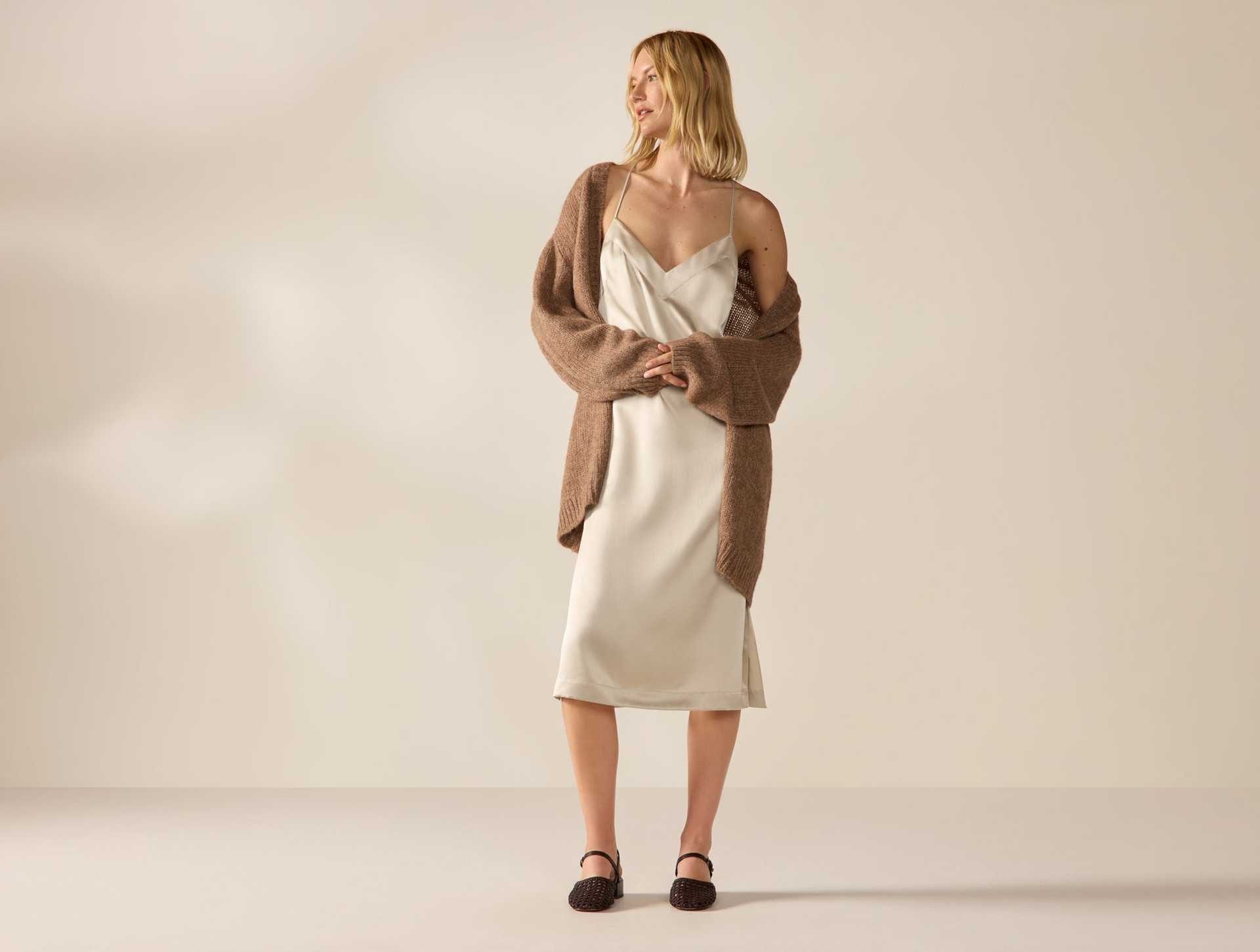
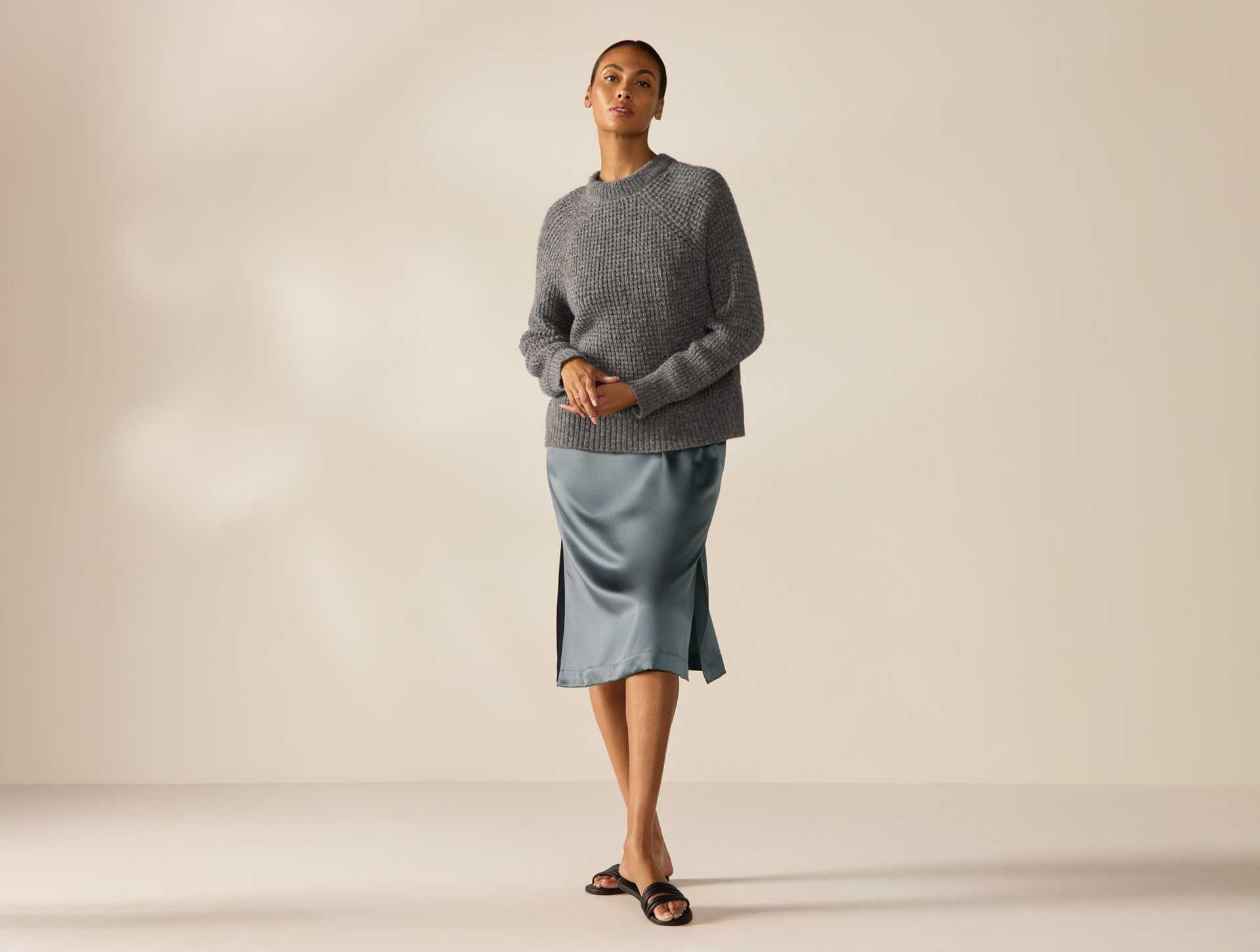
Blends are not automatically a compromise. A second fiber may contribute structure, strength, elasticity or a different surface feel. For example, a knit made from superfine alpaca and silk combines alpaca’s light warmth with silk’s smoothness. The Cordillera Sweater is one example: its listed composition is 80% alpaca and 20% silk. The Sibayo Cardigan uses the same stated blend in an open, relaxed design.
Read the percentage rather than relying on a front-of-tag phrase such as “cashmere touch” or “cashmere soft.” Those descriptions can refer to a sensation or finish; they don’t necessarily mean the item contains cashmere. When the actual fiber matters to you—because of feel, animal sourcing, allergies, warmth or care—look for the full composition on the sewn-in label or product specifications.
Also consider what the label doesn’t answer. Fiber content won’t tell you everything about the thickness of the yarn, the density of the knit, the quality of the finishing or how the piece behaves after repeated wear. Use it as a guide, then examine the construction.
Look closely at the knit
Knit construction has a quiet but powerful effect on how an accessory feels and performs. A dense, compact knit may offer more coverage and hold its shape well, while a looser or open stitch can feel airy and drape more fluidly. Neither is inherently better. The right choice depends on the garment, the climate and how you plan to wear it.
When possible, inspect the piece in good light. Look for stitches that appear reasonably even across the fabric, with no unexplained gaps, dropped stitches, snags or abrupt changes in tension. Pay attention to areas that receive extra stress: cuffs, collars, shoulder seams, plackets, buttonholes and the edges of scarves or shawls. These details are easy to overlook when a garment is new, but they influence how well it handles ordinary movement.
Give the fabric a gentle, brief stretch and let it relax. The goal isn’t to test it aggressively; it’s to notice whether the knit returns to its general shape and whether the stitches seem secure. Some natural-fiber knits have less spring than others, and an open design may behave differently from a ribbed cuff. A useful evaluation takes the garment’s intended construction into account rather than demanding that every knit act the same way.
Seams and edges deserve their own inspection. Neat, secure finishing can help reduce unraveling and keep a garment looking tidy. On a cardigan, check the placket and the points where sleeves meet the body. On a scarf, look for clean, stable edges and fringe that is attached evenly. On a hat, examine the crown and the ribbing around the opening. Small inconsistencies don’t always signal a problem, but loose threads, weak joins or visibly uneven finishing may affect day-to-day durability.
Consider the construction in relation to the accessory’s job. A lightweight open cardigan may be comfortable over a T-shirt or sleepwear, but it won’t provide the same coverage as a tightly knit pullover. A fine scarf may tuck neatly under a coat, while a chunkier one may suit colder conditions but take up more space. A beautiful knit is most useful when its structure works with the way you dress.
Softness is a clue, not a verdict
That first touch can be persuasive. A soft surface feels inviting, especially when you’re choosing something that will sit near your neck or wrists. Still, softness is only one part of the assessment. Finishing treatments, yarn structure and the way a fabric is handled can influence its feel, and a very soft item may not necessarily be the best match for your routine.
If you’re sensitive to texture, try to assess the accessory where it will actually be worn. A knit that feels comfortable between your fingers may feel different against the neck or inside the elbow. If you’re shopping online, seek out clear fiber details, close descriptions of the construction, and a complete care label. Review the seller’s return policy before purchasing if you need to try a garment to judge comfort.
Texture can also change with wear. Fine fibers may develop surface fuzz or pills where the fabric rubs against itself, a bag strap or a coat. That doesn’t automatically mean a garment is poor quality: pilling can occur as loose fibers work their way to the surface. The amount and location depend on the fiber, yarn, knit and friction. A piece that looks impeccable in a product description may still need gentle upkeep during regular use.
Instead of asking only, “Is it soft?” ask a fuller set of questions: Does it feel comfortable on the skin? Is it warm enough for the setting? Does the fabric seem stable? Will the cut and weight work with the clothes I already wear? Those answers provide a more useful picture than softness alone.
Match warmth and weight to your routine
Fine fibers are often appreciated for warmth, but warmth is not determined by fiber name alone. Yarn thickness, stitch density, garment shape and the layers worn underneath all play a part. A fine, lightweight knit may be ideal for a chilly office or as a layer beneath a coat. A more substantial knit may suit cold outdoor walks but feel too warm indoors.
Think about the conditions in which the accessory will earn its place. Do you need something for daily commuting, occasional travel, or a drafty room? Will you wear it over a blouse, under a jacket, or directly against your skin? Does it need to fit into a small bag? Answering these questions helps you choose a practical weight and shape rather than being swept along by a luxurious description.
Versatility is part of value. A cardigan that layers comfortably over more than one kind of outfit may see more use than a delicate piece reserved for a narrow set of occasions. The Sibayo’s open-front silhouette, for instance, is described as a relaxed layer; its balloon sleeves and ribbed details are construction features worth considering alongside the alpaca-and-silk content. A design can be appealing and still call for a quick check: will the sleeves fit beneath your usual coat, and does the open front suit the temperatures you encounter?
Climate matters, too. Someone who often moves between heated interiors and cold streets may prefer a layer that can be removed easily. In a mild climate, a lighter knit could be more useful than a dense, heavy accessory. Everyday comfort comes from a good match between the material, the garment’s construction and the wearer’s actual habits.
Treat care instructions as part of the buying decision
Care is not an afterthought. It affects how often you can wear a piece, how much time you’ll spend maintaining it and how likely it is to remain in rotation. Before choosing a fine-fiber accessory, check the care label for washing method, water temperature, drying instructions and any advice about professional cleaning.
Do not assume that every natural fiber needs the same treatment. A wool accessory, a cashmere knit and a silk blend can have different requirements, and the construction may matter as much as the fiber. A garment labeled for hand washing should not be put through a machine cycle simply because a different sweater survived one. When in doubt, follow the sewn-in instructions or contact the maker for clarification.
For hand-washable knits, gentle handling is usually the point: avoid rough scrubbing, twisting or wringing, which can distort the fabric. Support the garment when lifting it from water and remove excess moisture without stretching it. Lay it flat to dry if the care instructions call for that method, arranging it carefully so it doesn’t dry out of shape. Never use a hot dryer unless the label explicitly allows it.
Storage also plays a role. Clean and thoroughly dry a garment before putting it away for a longer period. Fold fine knits rather than hanging them if hanging could pull the shoulders out of shape. Keep stored pieces in a dry, well-aired place, and check them periodically. Avoid crowding delicate items beneath heavy clothing, which can crush or stretch the knit.
A realistic routine is the best routine. If a piece needs special handling that you know you won’t manage, that’s useful information—not a reason to feel guilty. You may find a washable accessory better suited to frequent wear, while reserving a more delicate item for occasions when its care needs are manageable.
Think about long-term value, not just the price tag
Price can reflect many things: fiber, sourcing, manufacturing, design, finishing and brand positioning. It does not, by itself, guarantee that an accessory will suit you or last longer. A thoughtful evaluation looks at the complete picture: how the item feels, how it is constructed, how often you expect to wear it and whether you’re prepared to care for it as directed.
One practical way to think about value is cost per wear. A higher-priced accessory that becomes a reliable part of your weekly wardrobe may serve you better than a less expensive piece that stays in a drawer. This is not a formula that can predict durability, and it shouldn’t be used to excuse vague product information. It is simply a reminder to connect the purchase to your real habits.
Ask for specific details when product descriptions are thin. Is the listed content a single fiber or a blend? Where is the garment made, and where are its fibers sourced, if that information is available? What does the care label say? Are there details about seams, ribbing, stitch type or finishing? Clear answers make comparison easier and help you distinguish verifiable information from broad claims.
For animal fibers, sourcing and animal welfare may also be part of the decision. Look for concrete information about how the fiber is obtained and what standards or certifications apply. A general assurance is not the same thing as independent verification, so check the wording carefully. Transparent sourcing information can help, but no single phrase tells the whole story of a supply chain.
A quick checklist before you choose
Whether you’re shopping in person or reading a product page, pause for a few checks before making a decision:
- Confirm the composition. Read the fiber percentages instead of relying on a name or feel-related description.
- Examine the knit. Look for reasonably even stitches, stable edges and secure joins in high-stress areas.
- Test comfort where it matters. Consider how the fabric feels against the neck, wrists or other areas where you’ll wear it.
- Match the weight to the job. Think about your climate, layers and typical daily settings.
- Read the care label first. Decide whether the washing, drying and storage requirements fit your routine.
- Look for useful specifics. Construction, origin and sourcing details are more informative than unsupported superlatives.
- Consider how often you’ll wear it. A versatile, comfortable piece may offer better personal value than an impressive but impractical one.
These checks won’t promise that an accessory will remain perfect forever. They can, however, help you make a more informed choice and avoid buying on softness or marketing language alone.
A more considered kind of everyday luxury
Fine-fiber accessories can bring comfort and pleasure to ordinary routines, from pulling on a warm layer before heading out to wrapping up on a cool evening. The best choice is not necessarily the rarest fiber or the most expensive garment. It is the piece whose content, construction, feel and care needs make sense for the way you live.
Start with the label. Look at the stitches, seams and edges. Consider whether the weight fits your climate and whether the care instructions feel manageable. When the available details are clear and the garment suits your everyday habits, you can choose with more confidence—and enjoy the piece for more than the first touch.